Electrical hazards don’t announce themselves. A miswired panel, an unverified de-energized circuit, or a forgotten re-energization can turn routine maintenance into catastrophe. That’s where lockout tagout (LOTO) devices for electrical systems become non-negotiable. These tools aren’t just compliance checkboxes—they’re engineered safeguards that physically prevent accidental startup during servicing. In high-voltage industrial settings or standard commercial electrical work, the right LOTO strategy stops arc flashes, electrocution, and downtime before they start.
This guide cuts through the noise to focus on practical, high-impact applications of electrical lockout tagout devices. From selecting the right hardware to implementing field-tested procedures, you’ll learn how to close safety gaps that manuals often overlook.
Why Electrical Lockout Tagout Is Different
Not all energy sources behave the same. Electrical systems store energy in capacitors, maintain ghost voltage, and often share circuits across zones. Unlike mechanical lockouts, electrical LOTO requires precision because:
- Residual energy persists even after shutdown
- Multiple disconnect points may exist on one machine
- Shared panels increase risk of cross-energization
A misplaced breaker lockout or missing tag can create a false sense of safety. OSHA estimates that improper LOTO procedures account for nearly 10% of all serious accidents in manufacturing. For electrical work, that risk multiplies.
Consider a maintenance team servicing a 480V motor control center. The main disconnect is locked, but a secondary feeder from another panel wasn’t isolated. Without proper electrical LOTO devices and verification steps, workers assume the system is dead—until it isn’t.
Core Components of Electrical LOTO Devices
Effective electrical lockout isn’t about one tool—it’s a system of interlocking components. Each device serves a specific function in the energy control process.
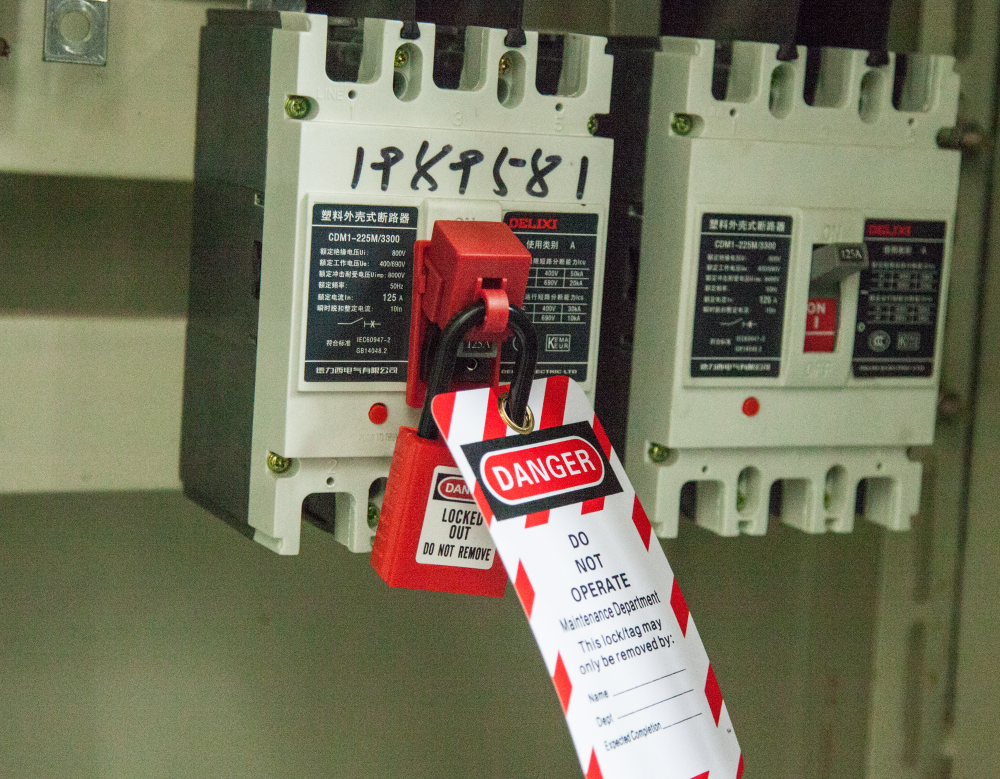
#### 1. Circuit Breaker Lockouts These clamp over breaker handles to prevent flipping. They come in sliding, hinged, or wrap-around designs depending on breaker style. For multi-pole breakers, use a single lockout that secures all poles simultaneously to avoid partial re-energization.
#### 2. Plug and Receptacle Lockouts Used on cords and outlets, these prevent accidental plugging. Common in equipment like heaters, grinders, or portable tools. Some models accept multiple padlocks for group lockout scenarios.
#### 3. Fuse Holder Lockouts Remove the fuse, insert the lockout device, then secure with a padlock. This ensures the fuse can’t be replaced during maintenance. Ideal for fuse-based disconnects in older panels or control circuits.
#### 4. Valve Lockouts (for Electrical Systems with Fluid Interlocks) Not all electrical hazards are purely electrical. Motors with hydraulic interlocks or cooling systems need valve lockouts as part of a comprehensive LOTO plan.
#### 5. Tagout Tags and Hasps Tags communicate critical information: who locked the device, when, and why. Pair with hasps to allow multiple workers to apply individual locks on a single disconnect point.

Each device must be durable, tamper-resistant, and clearly labeled. Material matters—nylon and polycarbonate hold up better than brittle plastics in harsh environments.
Top 5 Lockout Tagout Devices for Electrical Applications
Choosing the right hardware means matching device specs to your electrical infrastructure. Below are five proven, widely adopted LOTO solutions trusted in industrial and commercial settings.
| Product | Type | Key Features | Best For |
|---|---|---|---|
| Brady LOCKOUT169 | Circuit Breaker Lockout | Universal fit, accepts up to 2 padlocks, UV-resistant | Multi-worker electrical panels |
| Master Lock 469DAT | Plug Lockout | Fits NEMA 5-15 to 6-20 plugs, bright red for visibility | Tools, portable equipment |
| Grainger 3ZVY8 | Fuse Holder Lockout | One-size-fits-most fuse blocks, includes tag | Older electrical systems with fuses |
| Honeywell S480-SL | Sliding Breaker Lockout | Tool-free installation, shroud protects lock | High-density breaker panels |
| Seton 2S875 | Group Lockout Hasp | 13 lock stations, corrosion-resistant steel | Maintenance teams with shared equipment |
These aren’t one-size-fits-all. A 24/7 facility with high-voltage switchgear might need custom magnetic breaker lockouts, while a small workshop benefits from plug-based systems. The key is standardization—using the same device types across similar equipment reduces training time and errors.
Common Mistakes in Electrical LOTO Implementation
Even experienced teams make critical errors. Here are real-world pitfalls and how to avoid them:
- Using Tags Without Locks
- Tagout alone isn’t sufficient under OSHA 1910.147 unless it provides equivalent protection. Electrical systems demand physical lockout—tags are secondary.
- Skipping Verification Steps
- Locking out isn’t the same as proving de-energization. Always test with a voltage tester rated for the system. One refinery incident occurred because a worker used a low-voltage tester on a 13.8kV line.
- Ignoring Stored Energy
- Capacitors in VFDs or control panels can hold lethal charge for hours. Include bleed-down procedures in your LOTO checklist.
- Poor Lockout Accessibility
- If disconnects are behind locked rooms or require special tools, delays happen. Workers bypass procedures. Ensure all electrical isolations are reachable and clearly labeled.
- Using Personal Locks for Group Work
- In team maintenance, a single worker shouldn’t control the restart. Use group lockout hasps so every technician applies their own lock.
A 2022 NIOSH case review found that 68% of electrical LOTO failures stemmed from procedural shortcuts, not equipment failure. The tools work—if used correctly.
How to Build an Electrical LOTO Procedure That Works
Compliance starts with documentation. But your LOTO procedure shouldn’t be a binder collecting dust. It should be a living workflow. Here’s how to build one that sticks:
Step 1: Identify Energy Sources Map every electrical disconnect for each machine. Include upstream breakers, fused disconnects, and emergency stops. Label them clearly.
Step 2: Shutdown Sequence Define the order: stop machine, shut down control circuits, open main disconnect, verify off.
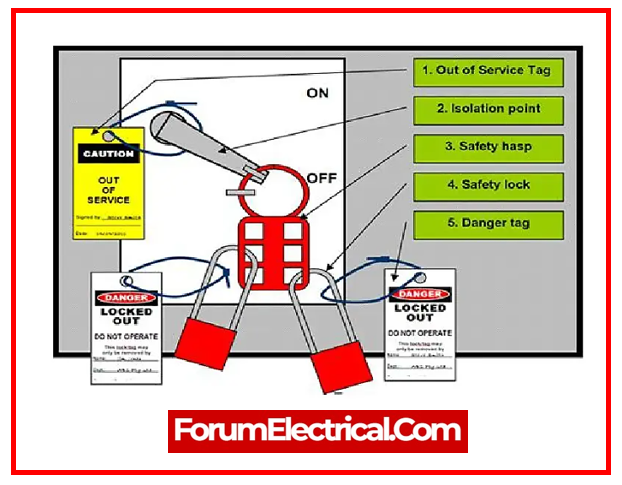
Step 3: Isolation & Lock Application Use appropriate lockout devices. One lock per authorized employee. No shared keys.
Step 4: Stored Energy Release Discharge capacitors, block moving parts, relieve pressure on electrically controlled valves.
Step 5: Verification Test each circuit phase-to-phase and phase-to-ground with a working tester. Use PPE rated for the hazard.
Step 6: Tag Application Attach a durable tag with name, date, department, and reason.
Step 7: Clearance & Restart Only the original lock-applying employee removes their lock. Supervisor confirms area is clear before re-energizing.
Example: A packaging line with servomotors and a central PLC. The LOTO procedure includes locking the main MCC breaker, unplugging control transformers, and verifying zero voltage at the VFD input. Tags specify “PLC firmware update—do not energize.”
OSHA Requirements and Real-World Compliance
OSHA 1910.147 mandates control of hazardous energy, but compliance isn’t about paperwork—it’s about enforceable practices. Key electrical-specific rules:
- Lockout devices must be durable, standardized, and identifiable
- Tags must clearly warn against operation
- Employees must be retrained annually or when procedures change
- Periodic inspections (at least yearly) must be documented
But compliance ≠ safety. Some companies pass audits yet still have near-misses. The gap? Culture.
A food processing plant reduced electrical incidents by 76% not by buying new lockouts—but by requiring every LOTO to be video-documented. Peer review exposed flaws in real time.
Audits should test the system, not just the checklist. Try a surprise “restart test” where safety staff attempt to energize a locked-out panel. If it’s possible, your LOTO is broken.
Choosing Between Lockout and Tagout for Electrical Systems
OSHA allows tagout-only systems under strict conditions: - Tags provide “equivalent protection” - Tasks are routine, repetitive, and integral to production - Employees are trained and supervised
But for electrical work, lockout is almost always required. Tags can be ignored, damaged, or fall off. A lock physically prevents access.
There’s no debate in high-risk environments. Utilities, refineries, and heavy manufacturing enforce 100% lockout. Tagout is a last resort, not a convenience.
Actionable Steps to Improve Electrical LOTO Today
- Audit existing lockout points – Walk each machine and verify disconnects are labeled and accessible.
- Standardize your LOTO kit – Buy one model per device type to reduce confusion.
- Conduct a live drill – Simulate a maintenance shutdown and test your procedure.
- Update tags with QR codes – Link to digital LOTO procedures for faster access.
- Involve maintenance teams – Let them design the workflow—they know the pain points.
Lockout tagout devices for electrical systems aren’t just hardware. They’re the physical manifestation of a safety culture. When done right, they don’t just prevent accidents—they build operational discipline. Start with the right tools, enforce the right process, and never assume the system is safe until it’s tested, locked, and verified.
FAQ
What should you look for in Lockout Tagout Devices for Electrical Safety: What You Need? Focus on relevance, practical value, and how well the solution matches real user intent.
Is Lockout Tagout Devices for Electrical Safety: What You Need suitable for beginners? That depends on the workflow, but a clear step-by-step approach usually makes it easier to start.
How do you compare options around Lockout Tagout Devices for Electrical Safety: What You Need? Compare features, trust signals, limitations, pricing, and ease of implementation.
What mistakes should you avoid? Avoid generic choices, weak validation, and decisions based only on marketing claims.
What is the next best step? Shortlist the most relevant options, validate them quickly, and refine from real-world results.