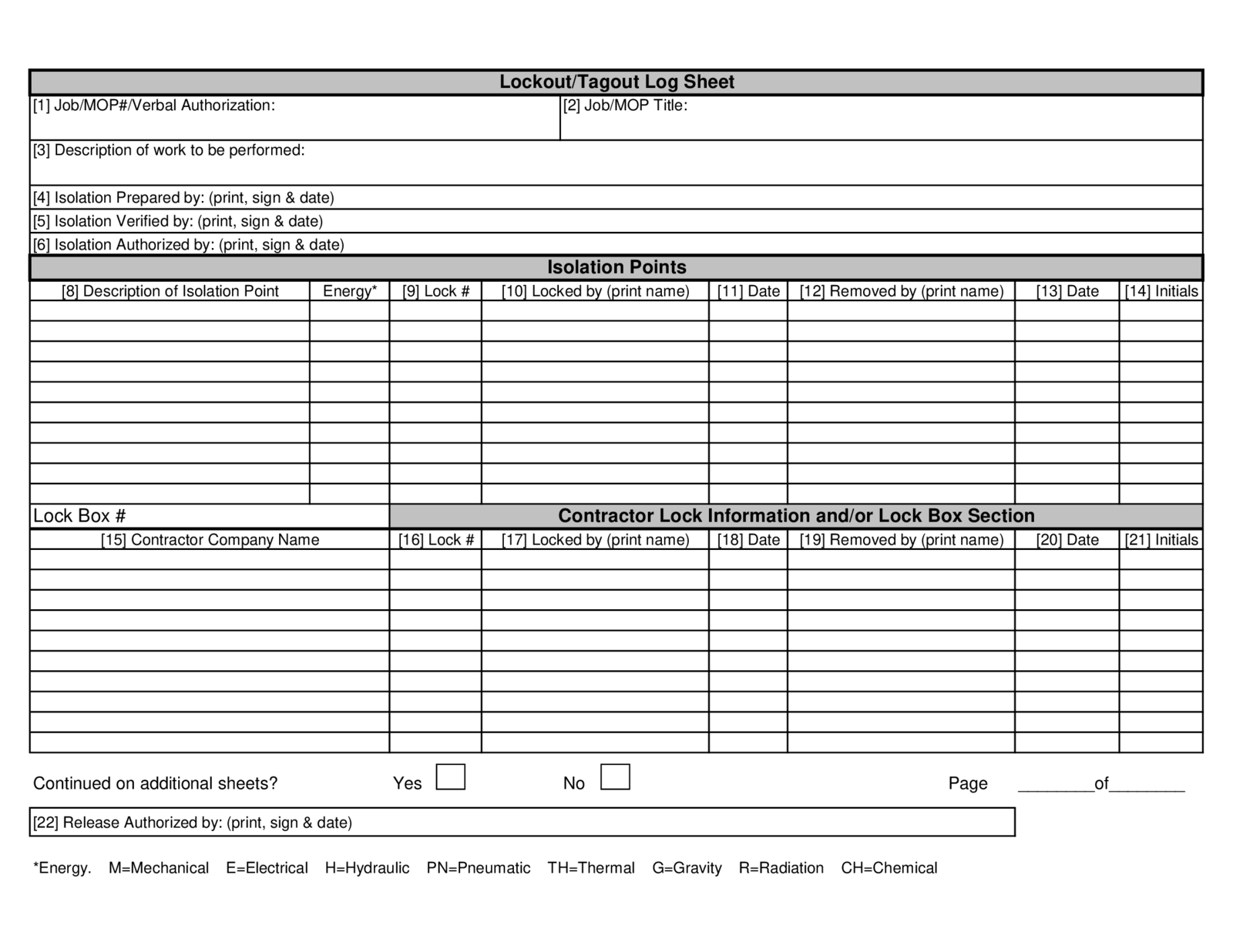
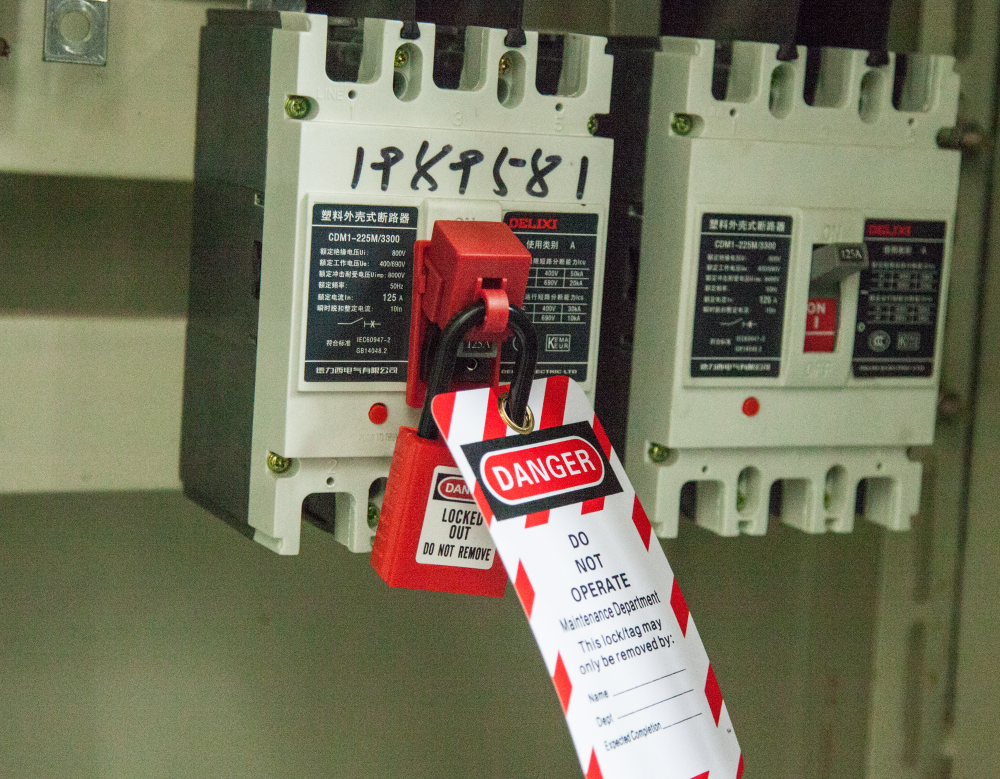
Workers get hurt not because they ignore danger, but because they assume someone else already handled it. In environments where machinery hums with stored energy—hydraulic, electrical, pneumatic—the assumption kills. That’s where the lockout tagout sign in sheet becomes more than a form. It’s a real-time communication tool, a legal record, and a final checkpoint before maintenance begins.
A lockout tagout (LOTO) sign in sheet documents who locked out equipment, when, why, and when it was returned to service. It’s simple on paper, critical in practice. Miss a name or skip a sign-off, and you risk catastrophic injury. Yet across factories, plants, and maintenance crews, inconsistent use, digital gaps, or poorly designed forms undermine its purpose.
This isn’t about bureaucracy. It’s about making sure every technician who opens a panel knows—without guessing—that power is truly off.
Why Every Energy-Control Process Needs a Sign In Sheet
OSHA standard 29 CFR 1910.147 requires employers to implement a lockout/tagout program to control hazardous energy. But compliance doesn’t end with locks and tags. The regulation explicitly emphasizes documentation and employee involvement. That’s where the sign in sheet delivers.
Without a sign in sheet, you lose visibility. Imagine three technicians servicing different sections of a conveyor system. Each applies their lock. But if no one tracks who’s still on the job, a supervisor might prematurely restore power, assuming the work is done.
The sign in sheet prevents that. It creates a closed-loop system:
- Accountability: Each worker signs in with their name, lock ID, and time.
- Verification: Supervisors confirm all locks are in place before work begins.
- Reversibility: Ensures no one restarts equipment until every worker signs out.
In one documented case at a Midwest food processing plant, a motor re-energized mid-maintenance, resulting in a severe hand injury. The root cause? No central log to confirm all personnel had cleared the area. A properly used sign in sheet would have flagged the missing worker.
Anatomy of an Effective LOTO Sign In Sheet
A useful sign in sheet isn’t a blank form with “Sign Here” at the bottom. It’s structured to prevent errors and capture essential details. The best versions include:
Key Components of the Form
| Field | Purpose |
|---|---|
| Equipment Name/ID | Prevents confusion between similar machines |
| Date & Start Time | Tracks duration and shift overlap |
| Worker Name & Employee ID | Eliminates ambiguity with common names |
| Lock ID Number | Matches physical lock to responsible person |
| Nature of Work | Clarifies scope (e.g., belt replacement, motor repair) |
| Sign-In Time | Confirms lock application |
| Sign-Out Time | Documents completion and lock removal |
| Supervisor Approval | Adds verification layer before re-energizing |

A steel fabrication shop in Texas reduced LOTO violations by 73% after switching from sticky-note logs to a standardized sheet with these fields. The clarity alone changed behavior.
Common Design Mistakes
- Too many fields: Overcomplication leads to skipped entries.
- No space for notes: Technicians need room to add hazards or delays.
- Poor durability: Paper forms near welding or coolant degrade fast.
- Lack of visibility: Sheets stored in file cabinets aren’t useful on the floor.
The fix? Laminate sheets, use clipboards near equipment, or go digital with tablets mounted in maintenance zones.
When and Where to Use the Sign In Sheet
The sign in sheet isn’t for every minor task. It’s for any maintenance, repair, or servicing where unexpected energization could cause harm. That includes:
- Replacing conveyor belts
- Clearing jams in presses or cutters
- Servicing high-pressure valves
- Repairing electrical panels
It’s not needed for routine tasks like lubrication or cleaning—unless those tasks require bypassing guards or accessing energized parts.
In a paper mill, operators once skipped the sheet for “quick jam clears.” After two near-misses in a month, leadership mandated the sheet for all energy isolation—even 5-minute jobs. The result? A cultural shift. Workers began treating every isolation like a formal procedure.
Real-World Example: Brewery Maintenance
A mid-sized craft brewery used CO2 tanks to carbonate beer. During a regulator replacement, a technician forgot to check the log and opened a charged line. The sudden release damaged equipment and injured a colleague.
Post-incident, they implemented a sign in sheet at each isolation point. Now, before any work on gas lines, hydraulics, or pumps, the sheet is filled out and posted visibly. Everyone on shift knows it’s active—and no equipment is re-energized without a full sign-out.
Digital vs. Paper: Which Works Better?
The debate isn’t about trendiness. It’s about reliability, traceability, and compliance under pressure.
Paper Sign In Sheets
Pros: - No tech required - Works during power outages - Low cost to deploy
Cons: - Easily lost or damaged - Hard to audit or search - No real-time alerts
Best for: Small teams, low-tech environments, temporary setups.
Digital Sign In Systems
Pros: - Real-time tracking of lock status - Automated reminders for overdue tasks - Integration with CMMS (Computerized Maintenance Management Systems) - Searchable logs for audits
Cons: - Requires devices and training - Vulnerable to software failure - Higher initial cost
Best for: Large facilities, regulated industries, teams with existing digital workflows.
A pharmaceutical plant in New Jersey switched to tablets with a LOTO app. Supervisors now get push notifications when a lock remains active past its estimated completion time. In six months, lock removal delays dropped by 68%.
Five Reliable Lockout Tagout Sign In Sheet Templates
Not every form is created equal. These five templates have proven track records in real-world facilities:
- OSHA-Compliant Master Log (PDF)
- - Standardized fields matching 1910.147
- - Includes space for supervisor sign-off and witness
- - Ideal for centralized logging at shift handovers
- Daily LOTO Tracker (Excel)
- - Auto-calculates duration of lockout
- - Color-codes active vs. completed jobs
- - Exportable for audits
- Magnetic Dry-Erase Board (Physical)
- - Reusable, wall-mounted for high-traffic areas
- - Uses magnetic employee tags and lock IDs
- - Instant visual status for entire team
- Smart LOTO App (iOS/Android)
- - Scans QR codes on equipment to auto-fill data
- - Sends alerts when someone signs in
- - Cloud backup and OSHA-ready reporting
- Multi-Language Clipboard Sheet
- - Bilingual (English/Spanish) headers
- - Icons to guide low-literacy users
- - Waterproof and tear-resistant
Choose based on your team’s size, tech access, and risk profile. A 10-person workshop may thrive on a dry-erase board. A 200-person plant likely needs digital tracking.
Common Mistakes That Undermine the Sign In Sheet
Even with the best template, poor execution kills effectiveness.
1. “I’ll sign it later.” Procrastination leads to omissions. Workers fill out the sheet after the job—sometimes forgetting they were involved. Fix: Enforce sign-in before applying the lock, sign-out after removing it.
2. Borrowing locks or sharing IDs Two people using the same lock ID creates confusion. During an outage at a chemical plant, a supervisor removed a lock, assuming the worker had left—only to find him still inside a reactor. Rule: One person, one lock, one ID—logged on the sheet.
3. No training on the form’s purpose If workers see the sheet as “just paperwork,” they’ll rush it. Train teams on real incidents where logs prevented injury. Make it real, not regulatory.
4. Failing to review the sheet during shift changes Incoming crews must verify active lockouts. A sign in sheet left unreviewed is a time bomb. Solution: Build sheet review into shift handover briefs.
Integrating the Sheet Into Your LOTO Program
A sign in sheet doesn’t stand alone. It’s part of a larger energy control ecosystem:
- LOTO Procedure Manuals: Reference the sheet in written protocols.
- Employee Training: Include form-filling in hands-on drills.
- Audits: Check 10% of completed sheets monthly for accuracy.
- Incident Reviews: Use logs to reconstruct events after a near-miss.
One automotive parts supplier ties sign in sheet compliance to safety bonuses. Not for perfection—but for consistent use. The goal isn’t flawless paperwork. It’s habitual behavior.
Closing: Make the Sign In Sheet a Non-Negotiable Step
You can have the best locks, the brightest tags, and the most detailed procedures. But without a sign in sheet, you’re relying on memory and assumptions—two of the weakest links in safety.
Implement a clear, durable, accessible form. Train your team to use it without exception. Audit it regularly. And treat every unsigned lock as a red flag.
Because in the end, the sign in sheet isn’t about OSHA. It’s about making sure every worker goes home the same way they arrived—whole, safe, and aware.
Frequently Asked Questions
What is a lockout tagout sign in sheet? It’s a log that records which employees have applied locks to machinery, when, and for what maintenance, ensuring safe re-energization.
Who should sign the LOTO sign in sheet? Every employee who applies a lock to equipment must sign in and sign out personally.
Can a digital log replace a paper sign in sheet? Yes, if it captures the same data and is accessible to authorized personnel during maintenance.
Is a sign in sheet required by OSHA? OSHA doesn’t mandate a specific form, but it requires documentation of lockout procedures and employee involvement—making a sign in sheet essential for compliance.
How long should completed sheets be kept? Retain them for at least one year for audit and incident investigation purposes.
Should contractors sign the sheet? Yes. Any outside worker isolating energy must be included in the log.
Can one person sign for a team? No. Each individual must sign in and out with their own lock and ID. Group lockout procedures still require individual accountability.
FAQ
What should you look for in Lockout Tagout Sign In Sheet Best Practices and Uses? Focus on relevance, practical value, and how well the solution matches real user intent.
Is Lockout Tagout Sign In Sheet Best Practices and Uses suitable for beginners? That depends on the workflow, but a clear step-by-step approach usually makes it easier to start.
How do you compare options around Lockout Tagout Sign In Sheet Best Practices and Uses? Compare features, trust signals, limitations, pricing, and ease of implementation.
What mistakes should you avoid? Avoid generic choices, weak validation, and decisions based only on marketing claims.
What is the next best step? Shortlist the most relevant options, validate them quickly, and refine from real-world results.